
In an era where every brand seems to chase the next AI tool, a curious reversal is emerging. Brands are now embracing a brand anti-AI stance, openly rejecting generative ads and algorithm-crafted bodies. Why? Because authenticity is becoming a currency. For marketers navigating an anxious AI-saturated world, this shift is not just trendy — it’s strategic.
Key Facts, Trends & Insights
What’s happening
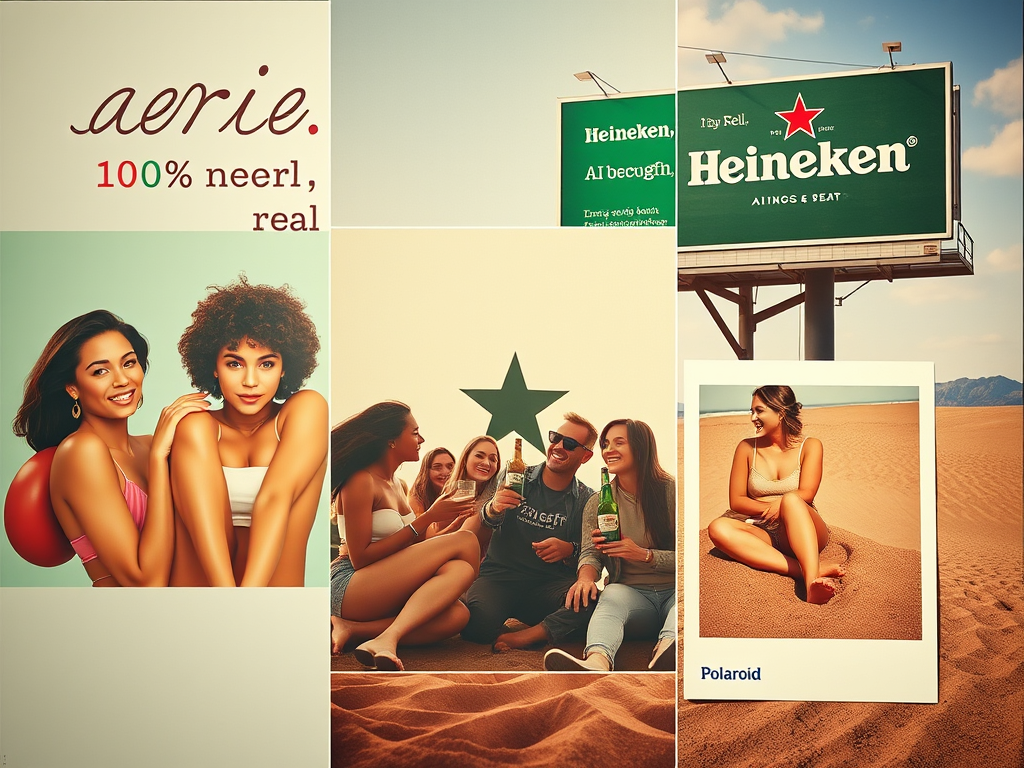
• Aerie has declared it will never use AI-generated people or bodies in its campaigns. It reaffirmed its “100% real” pledge, gaining over 40,000 likes on a single Instagram post and boosting engagement by roughly 75% in under two weeks.
• Heineken launched an outdoor campaign poking at AI-driven wearables, with a billboard in New York proclaiming: “The best way to make a friend is over a beer.” It satirised an AI wearable campaign and championed face-to-face interaction.
• Polaroid is leaning into its analog heritage, running bus-stop ads near tech hubs that read lines like “AI can’t generate sand between your toes”. The message: real, imperfect, human moments matter.
Why brands are doing it
- Consumer fatigue with AI. A recent survey shows nearly half of Americans feel more concerned than excited about AI’s growing role.
- Emotional resonance beats novelty. Research from NielsenIQ suggests AI-generated ads tend to underperform on emotional engagement and trust metrics. (Business Insider)
- Brand differentiation. In a landscape where tools and templates are increasingly shared, a brand anti-AI stance becomes a visible badge of authenticity and human creativity.
- Cultural signal. For younger audiences especially, the realness of “human made” is a statement about values, not just visuals.
What this means for marketing
- Brands must rethink the role of AI in creative workflows. It’s not about banning AI entirely — but about choosing where the human touch remains non-negotiable.
- Trust-led messaging may become more important than performance-led metrics. Consumers may respond more to “real people behind the brand” than to “optimized at scale”.
- Agencies and in-house teams must balance efficiency and authenticity: you might use AI for process, but humans still shape identity.
- The narrative shift: authenticity as prestige. Just as transparency and sustainability became brand differentiators, so might “zero-AI creative” or “human-first visuals”.


Leave a Reply