
The Moment Impressions Lost Their Power
For years, advertising traded on a simple promise.
If an ad was served, it counted.
That promise is breaking down.
In an environment shaped by scrolling, multitasking, and background screens, advertisers are asking a sharper question: did anyone actually pay attention?
This shift has accelerated in recent months as brands scrutinize video spend, especially in connected TV. Coverage from AdAge, Campaign, and The Wall Street Journal points to the same conclusion. Visibility is no longer the same as impact.
Why Attention Entered the AdTech Conversation
Attention metrics aim to measure the quality of exposure, not just its existence. They look at signals like viewability duration, screen presence, sound on, and user interaction patterns.
This approach gained traction as CTV budgets surged. Unlike linear TV, CTV promised digital-style accountability. But impressions alone could not explain performance gaps.
Research cited by AdAge shows that ads with higher attention scores correlate more strongly with brand lift and recall than raw reach. That insight changed planning conversations.
Attention became a proxy for meaning.
How Platforms Are Responding
Major platforms are adapting fast.
Netflix has emphasized premium, full-screen viewing environments in its ad tier. Amazon Ads has highlighted attention-friendly formats across Prime Video and Fire TV.
Measurement providers now integrate attention signals into reporting layers rather than treating them as add-ons. This includes partnerships with independent vendors that specialize in attention scoring.
The goal is consistency. If attention is to matter, it must be comparable.
Why CTV Is the Testing Ground
Connected TV sits at the center of this shift.
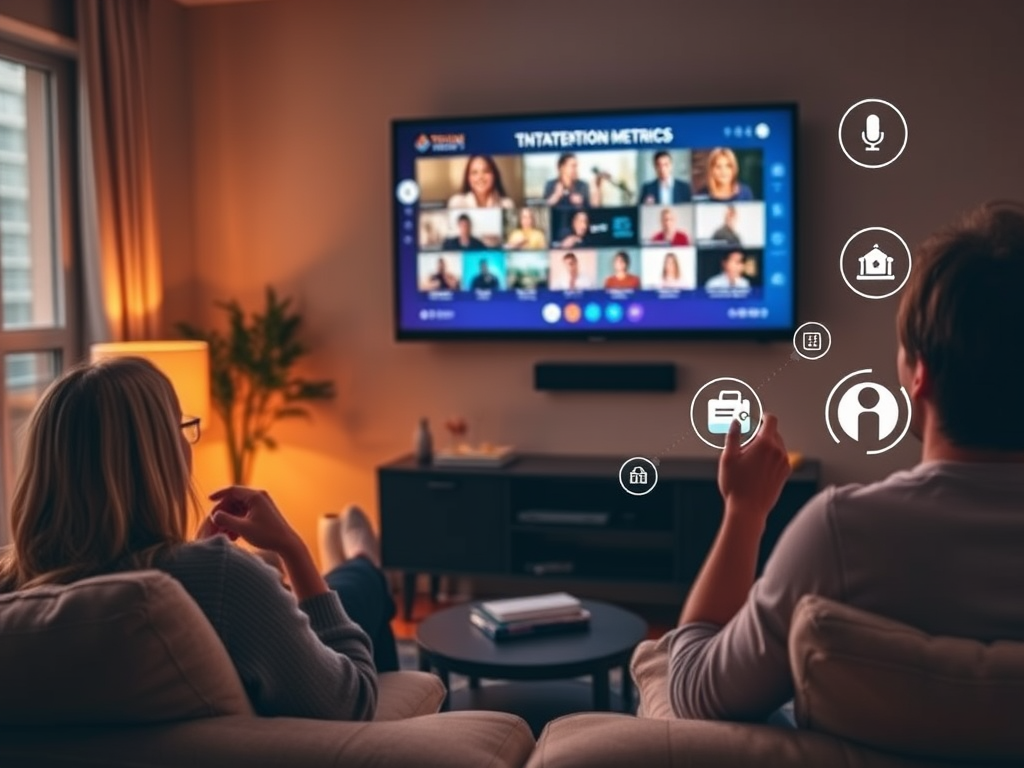
CTV ads often play in living rooms, not browsers. The screen is large. The content is long-form. But distractions are real.
Advertisers discovered that two identical impressions can deliver very different outcomes. One runs while viewers watch. Another runs while phones glow.
Attention metrics attempt to capture that difference.
Campaign has described CTV as “the proving ground” for attention-based buying. If it works here, it will spread everywhere.
The Industry Push for Standards
Attention cannot scale without shared definitions.
Industry bodies like the Interactive Advertising Bureau are working with advertisers and platforms to explore frameworks that align attention with existing KPIs.
The challenge is balance. Too many signals create confusion. Too few dilute value.
The current direction favors hybrid models. Attention complements impressions. It does not replace them outright.
This mirrors earlier transitions from clicks to viewability.
What Smart Advertisers Are Doing Now
Leading brands are testing attention-weighted planning. They are comparing attention-adjusted CPMs across publishers. They are linking attention scores to brand lift studies.
Agencies are updating narratives. Media quality is back on the agenda.
As TechCrunch recently noted, attention metrics give marketers language to justify premium environments in a performance-driven world.
The Risk of Overcorrection
Attention is powerful, but not magic.
Critics warn against treating it as a silver bullet. Attention does not guarantee persuasion. Creative still matters. Context still matters.
The smartest use treats attention as a diagnostic tool. It reveals where ads have a chance to work.
That restraint will determine whether attention becomes infrastructure or hype.
From Exposure to Engagement
Attention metrics advertising reflects a deeper industry shift.
AdTech is moving from counting exposure to understanding experience. That change favors quality over volume and insight over scale.
In a crowded media economy, attention is not just measured. It is earned.
The platforms and brands that learn how to earn it consistently will define the next phase of advertising effectiveness.


Leave a Reply