
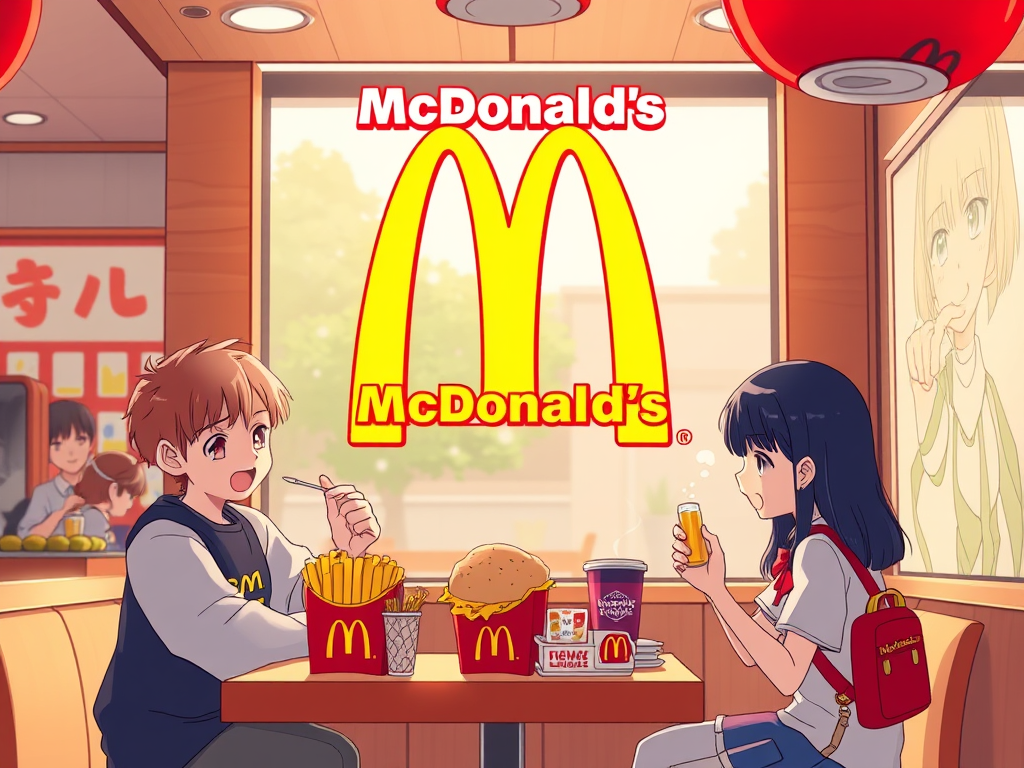
When a Meme Becomes a Strategy
Some brand ideas refuse to disappear.
WcDonald’s is one of them.
What started decades ago as a background joke in anime has become one of the most distinctive long-term marketing plays in the fast-food industry. In recent weeks, McDonald’s reignited the WcDonald’s universe through new anime content, merchandise, and cultural activations—drawing renewed attention from both fans and marketers.
AdAge and Variety have described the move as less of a campaign and more of a continuation. That distinction matters.
The Origin Story That Brands Can’t Fake
WcDonald’s did not begin in a boardroom.
It emerged organically in Japanese anime, where creators altered the McDonald’s name to avoid licensing issues.
Rather than fight it, McDonald’s embraced it.
Over time, the brand leaned into the parallel universe. Stylized logos. Anime shorts. Pop-up restaurants. Limited-edition packaging. Each activation built on the same mythology.
This year’s renewed push feels confident because it is grounded in history. As Variety noted, audiences can sense when brands borrow culture versus when they belong to it.
Why WcDonald’s Works in 2026
1. World-Building Over Campaign Thinking
WcDonald’s is not a seasonal idea. It is a universe.
Instead of launching and abandoning concepts, McDonald’s treats WcDonald’s as expandable IP. That allows for consistency across formats—film, physical retail, social, and merchandise.
Campaign has highlighted this as a key shift in modern brand strategy. The strongest brands now think like entertainment studios, not advertisers.
2. Cultural Respect, Not Appropriation
Anime fandom is highly sensitive to inauthenticity.
McDonald’s avoids that trap by collaborating with real creators and studios, not parodying the form.
The result feels celebratory rather than exploitative. Fans recognize the difference.
AdAge has pointed out that this respect earns permission. And permission unlocks participation.
3. Scarcity Without Exclusion
Limited drops, pop-ups, and short films create urgency. But the tone stays playful, not elitist.
That balance is rare. Many brands misuse scarcity. McDonald’s uses it to spark curiosity without alienation.
Why This Is a Marketing Sensation Right Now
The current wave of WcDonald’s content arrives at a moment when brands are under pressure to show cultural fluency. AI-generated creativity is everywhere. Audiences crave ideas with texture.
WcDonald’s delivers that texture. It is layered, referential, and slow-built.
The Wall Street Journal recently described this kind of marketing as “earned familiarity.” People feel like they discovered it, even when it is widely distributed.
What Other Brands Can Learn
Most brands chase relevance through speed.
WcDonald’s proves the opposite.
Relevance can be accumulated. Lore can compound. Ideas can mature.
The lesson is not to copy anime aesthetics. It is to invest in ideas that can live longer than a media plan.
Conclusion: The Power of Playing the Long Game
WcDonald’s is not a comeback.
It never really left.
McDonald’s turned an accidental piece of pop culture into a durable brand asset by doing one thing consistently: letting the idea grow at its own pace.
In an industry obsessed with what’s next, WcDonald’s is a reminder that the most powerful marketing sometimes comes from what you choose to nurture, not replace.
That patience is rare.
And right now, it’s paying off.


Leave a Reply