
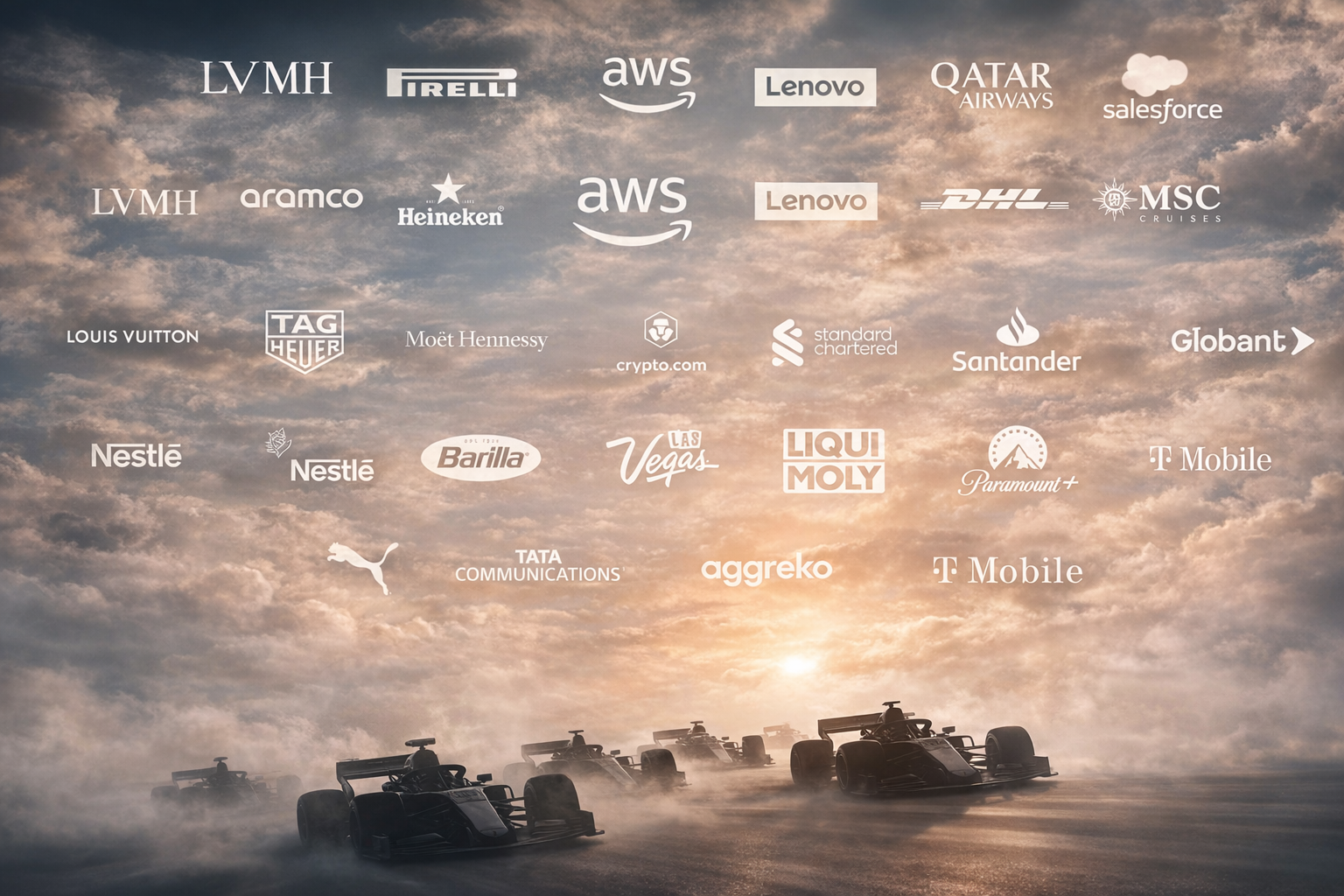
n modern Formula One, partnerships are no longer decorative. Apparel, watches, and technology brands are selected to reinforce how teams want to be perceived culturally. These collaborations extend beyond race weekends into fashion drops, lifestyle positioning, and long-term brand equity. Below is a verified snapshot of the most visible and current partnerships, including new entrants preparing for the 2026 reset.
Ferrari
Ferrari operates as both a racing team and a luxury brand, and its partnerships reflect that dual identity.
Apparel: Puma (long-term official teamwear and lifestyle partner). The relationship includes team kits, fanwear, and fashion-leaning collections.
Eyewear: Ray-Ban, aligning Ferrari’s Italian heritage with global lifestyle appeal.
Watches: Richard Mille, positioned firmly in the ultra-luxury segment and closely associated with performance engineering.
Energy & automotive: Shell, reinforcing Ferrari’s technical and performance narrative.
Ferrari’s ecosystem centers on heritage, craftsmanship, and exclusivity.
Mercedes-AMG Petronas
Mercedes positions itself at the intersection of modern luxury, performance, and technology.
Apparel: Adidas, announced as official team partner, marking a strategic move toward lifestyle and streetwear relevance beyond motorsport.
Watches: IWC Schaffhausen, emphasizing precision engineering and premium craftsmanship.
Energy & sustainability: Petronas, central to the team’s identity and future-focused messaging.
Mercedes’ collaborations signal technical authority with cultural polish.
Red Bull Racing
Red Bull Racing builds partnerships around energy, youth culture, and disruption.
Apparel: Puma, blending performance wear with lifestyle-friendly design.
Watches: TAG Heuer, closely aligned with speed, timing, and bold branding.
Lifestyle & content: Red Bull integrates partners deeply into media, content, and fan engagement rather than treating them as surface sponsors.
McLaren
McLaren emphasizes design, innovation, and modernity.
Apparel: Castore, supplying performance-driven teamwear with a clean, contemporary aesthetic.
Watches: Richard Mille, reinforcing a shared focus on lightweight engineering and innovation.
Technology: Long-standing partnerships across data, simulation, and engineering reinforce McLaren’s tech-forward image.
Williams Racing
Williams blends heritage with a rebuilding narrative.
Apparel: Puma, providing teamwear and fan collections.
Watches: Bremont, a British luxury watchmaker aligned with craftsmanship and heritage.
Williams’ partnerships emphasize resilience, tradition, and engineering pride.
Audi Formula 1 Team
Audi’s arrival for 2026 is one of the most strategically important shifts in the paddock.
Apparel: Adidas (official teamwear partner), announced in connection with Audi’s Formula One project and aligned with performance and lifestyle ambitions.
Watches: Tudor (inherited via Sauber partnership), positioning Audi within accessible luxury rather than ultra-high-end exclusivity.
Automotive & technology: Audi’s own brand acts as the central narrative driver, tying Formula One directly to electrification, efficiency, and future mobility.
Audi’s partnerships signal credibility, precision, and long-term commitment rather than spectacle.
Cadillac Formula 1 Team
Cadillac’s confirmed entry via the Andretti-backed project introduces a distinctly American brand voice to Formula One.
Apparel: To be announced. No official teamwear partner has been confirmed yet.
Watches: To be announced. No verified timekeeping partnership at this stage.
Automotive branding: Cadillac itself is the core signal — positioning Formula One as a platform for American luxury, performance, and global ambition.
At this stage, Cadillac’s value lies less in existing collaborations and more in the commercial opportunity it creates for future partners ahead of 2026.
The pattern behind the partnerships
Several themes are clear across the grid. Apparel partnerships increasingly overlap with lifestyle and streetwear. Watch brands remain essential symbols of precision and status. New teams prioritize partners that help define identity before results exist. Most importantly, teams are choosing collaborators that reinforce cultural positioning, not just competitive performance.
Apparel partnerships increasingly overlap with lifestyle and streetwear, turning Formula One teams into cultural platforms rather than purely sporting organizations. The visual culture of the paddock has become influential enough that the sport is now frequently discussed within fashion circles. In a separate analysis on PENKO Design, we explored why Formula 1 has quietly become one of the most stylish sports in the world — driven by driver personalities, luxury partnerships, and the growing cultural relevance of paddock style.
The takeaway
Formula One partnerships today function as brand architecture, not decoration. Teams are building ecosystems that stretch into fashion, luxury, and technology, using collaboration to shape perception far beyond the track. With new entrants like Audi and Cadillac preparing for 2026, the partnership landscape is only becoming more strategic. For marketers, Formula One is no longer about buying space. It is about choosing alignment in one of the most visible cultural arenas in global sport.
Sources:
- Formula One — https://www.formula1.com
- Ferrari — https://www.ferrari.com
- Mercedes-AMG Petronas F1 — https://www.mercedesamgf1.com
- Red Bull Racing — https://www.redbullracing.com
- McLaren Racing — https://www.mclaren.com/racing
- Williams Racing — https://www.williamsf1.com
- Audi Formula 1 Project — https://www.audi.com/en/sport/motorsport/
- Cadillac — https://www.cadillac.com


Leave a Reply